Today
Start with a real working moment
A customer request stalls because information is missing or the next step is unclear. Your people can show where that happens.
How we work together
You know your business. We provide the agreed design, development and operations. We start with one process, deliver the first application and keep helping improve it. Your people review how it works; your SLA defines the support.
A shared route to daily use
Start with a recognisable moment, not a long feature list: a customer request, a handover or a decision. Together we agree what should improve and test whether the application helps.
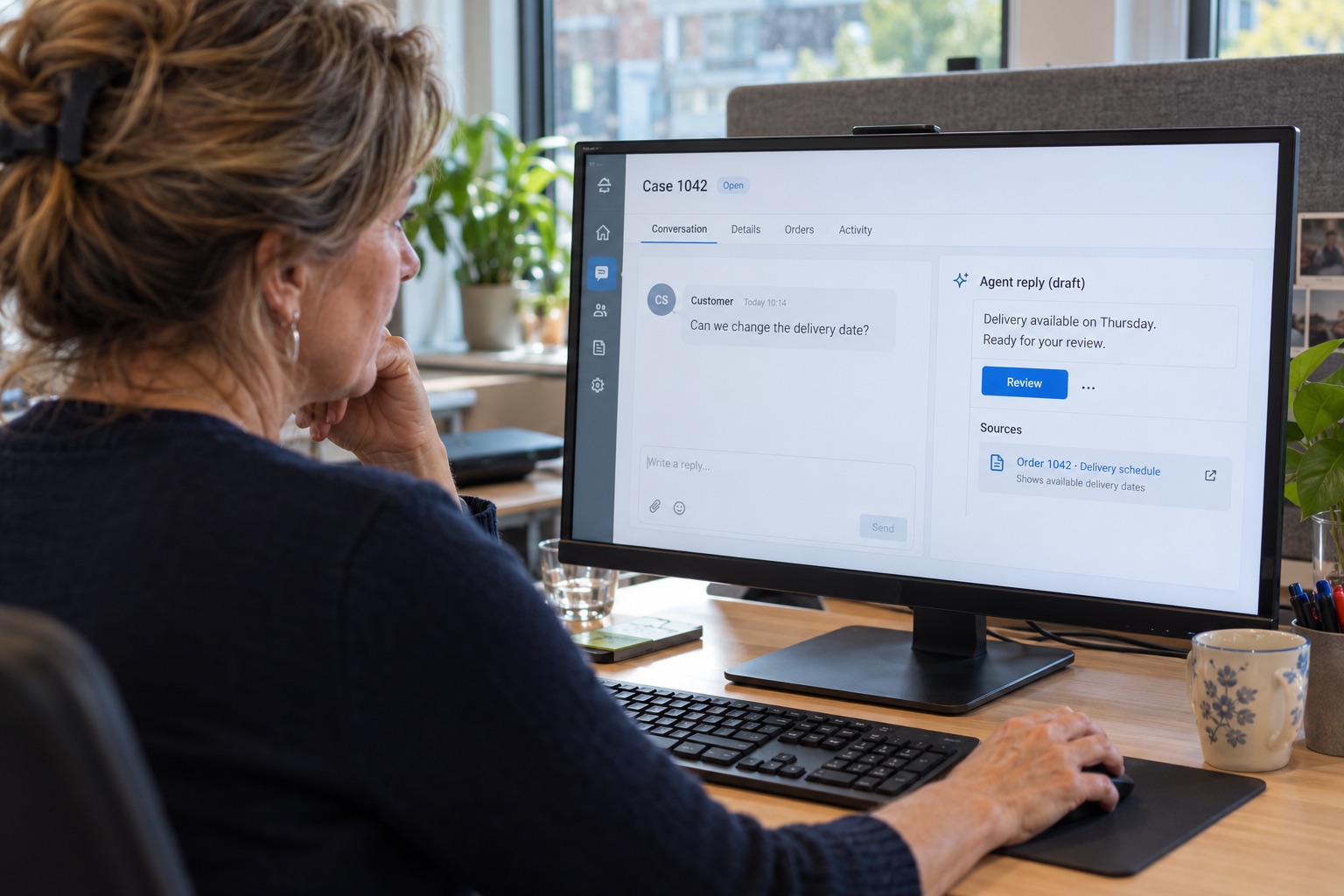
Today
A customer request stalls because information is missing or the next step is unclear. Your people can show where that happens.
Possible with APPSS
Your team describes the work through real examples. AI helps capture the agreements; APPSS runs the reviewed model and the team tests the follow-through.
A first application that supports recognisable work.
For your people
Everyday work and its exceptions shape the first version. Your colleagues test real examples and explain what still needs to work better.
For your customers
Design the follow-through, not just the form: who acts, what does the customer see and when is the request genuinely complete?
You do not need a technical specification. A real request, spreadsheet or difficult handover gives us a starting point. Together we decide what the first version should improve and who can assess the result.
01
Show how the work happens and what needs to improve. Together we define facts, rules, roles and exceptions. We agree scope, integrations, costs, environment and support before starting.
02
Our expert and agent team configures the business model on the existing engine. We develop or connect your own interface. Your people try their everyday tasks with the same customer data; we check outcomes, exceptions and permissions.
03
We agree which data, customer identifiers and history move across, and which source becomes authoritative. Your people review familiar tasks. After approval, we make the tested switch, with support and recovery arrangements.
04
Describe the feature or changed rule. We ask follow-up questions, develop the agreed change and test its effects. After release you receive a confirmation email. Operations and support follow your SLA.
The process owner determines the authoritative information and agreements. Employees assess the result against real working situations. IT or operations joins for access, data flows and continuity. An agent’s proposal is not approval: agreed review and permissions apply before release. The APPSS development team uses agents for building and operations; agents in your own business process receive their own task and access permissions.
Bring one example of work that stalls today. What information is missing? Who needs to decide? What does the customer or colleague see next? Agree how you will recognise an improvement, such as less retyping, clearer follow-up or fewer corrections. Use that to assess whether the application helps. Design and development are agreed separately from the server subscription.
Your business defines the task, information and permissions. An agent acts within your rules of engagement.
Know what is needed, not everything.
Your sovereign server
Your rules. Your control.
The outcome belongs to the business process.
Your business decides who gets access, which actions are allowed and when approval is required.
We assess what your organisation needs for each process. A SaaS system can stay, connect or make way for APPSS. For a replacement, we assess export, data quality, history, permissions and integrations. A portal or app you control can stay familiar if it connects to the new behaviour. A working proof helps your team decide the next migration step.
Development scope and costs are agreed separately. The server subscription, external services and agreed support each have their own terms.
We document application rights, data, repository access, dependencies, support and exit arrangements for your project. Your own business model does not automatically mean ownership of all software or external services.
Start with one concrete task, the people involved and the outcome you need. Your project brief prepares the first conversation.